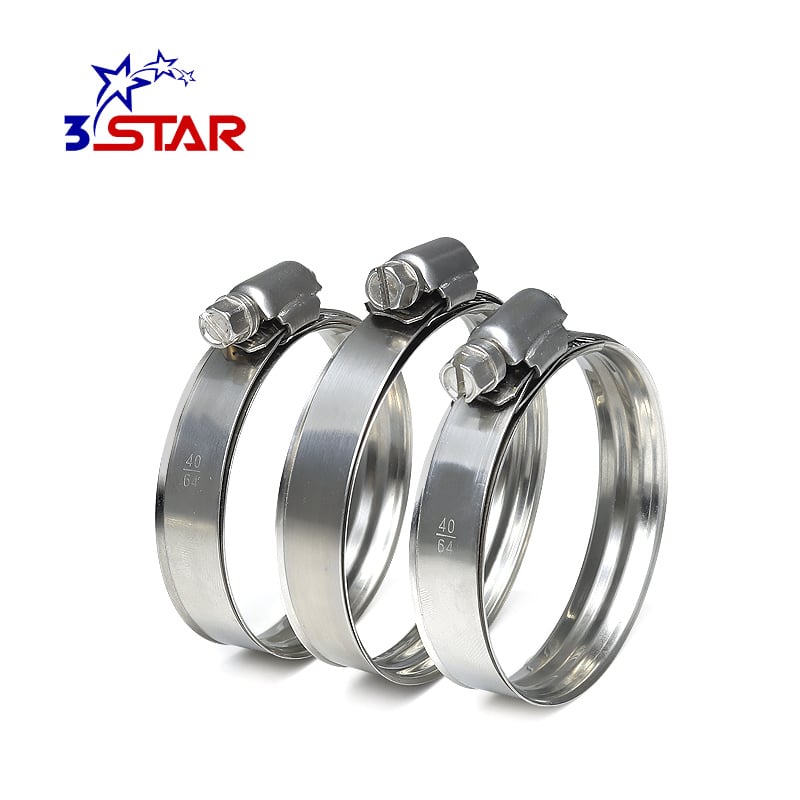
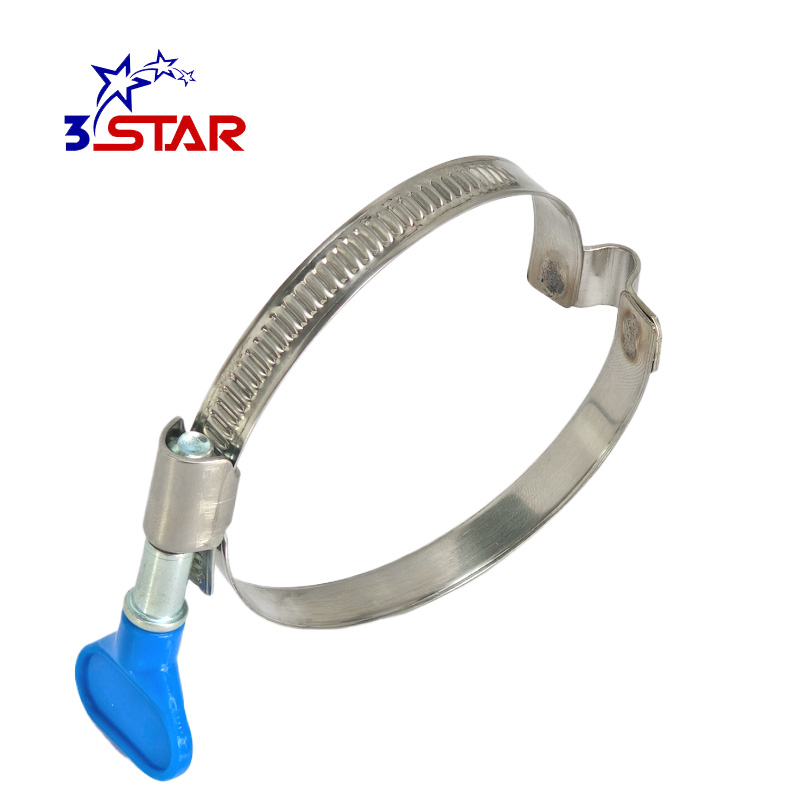
Worm gear hose clamps, also widely known as worm drive hose clamps, are one of the most popular adjustable fasteners for hose connections across automotive, plumbing, agricultural, marine and general industrial sectors. Many installers and buyers only know how to tighten them, but understanding every part of a worm gear hose clamp helps you select the right model, avoid premature failure, and achieve leak-free hose joints.
In this article, we break down every component of a standard worm gear hose clamp, explain its function, material options, and what to look for when sourcing quality clamps.
A worm gear hose clamp is an adjustable circular fastener designed to secure rubber, silicone, PVC and other flexible hoses onto pipe barbs, fittings and nipples. It delivers uniform clamping pressure around the hose circumference to prevent liquid, gas or air leakage. Thanks to its simple structure, reusability and wide adjustable diameter range, it remains the go-to choice for both DIY repair and heavy industrial projects.
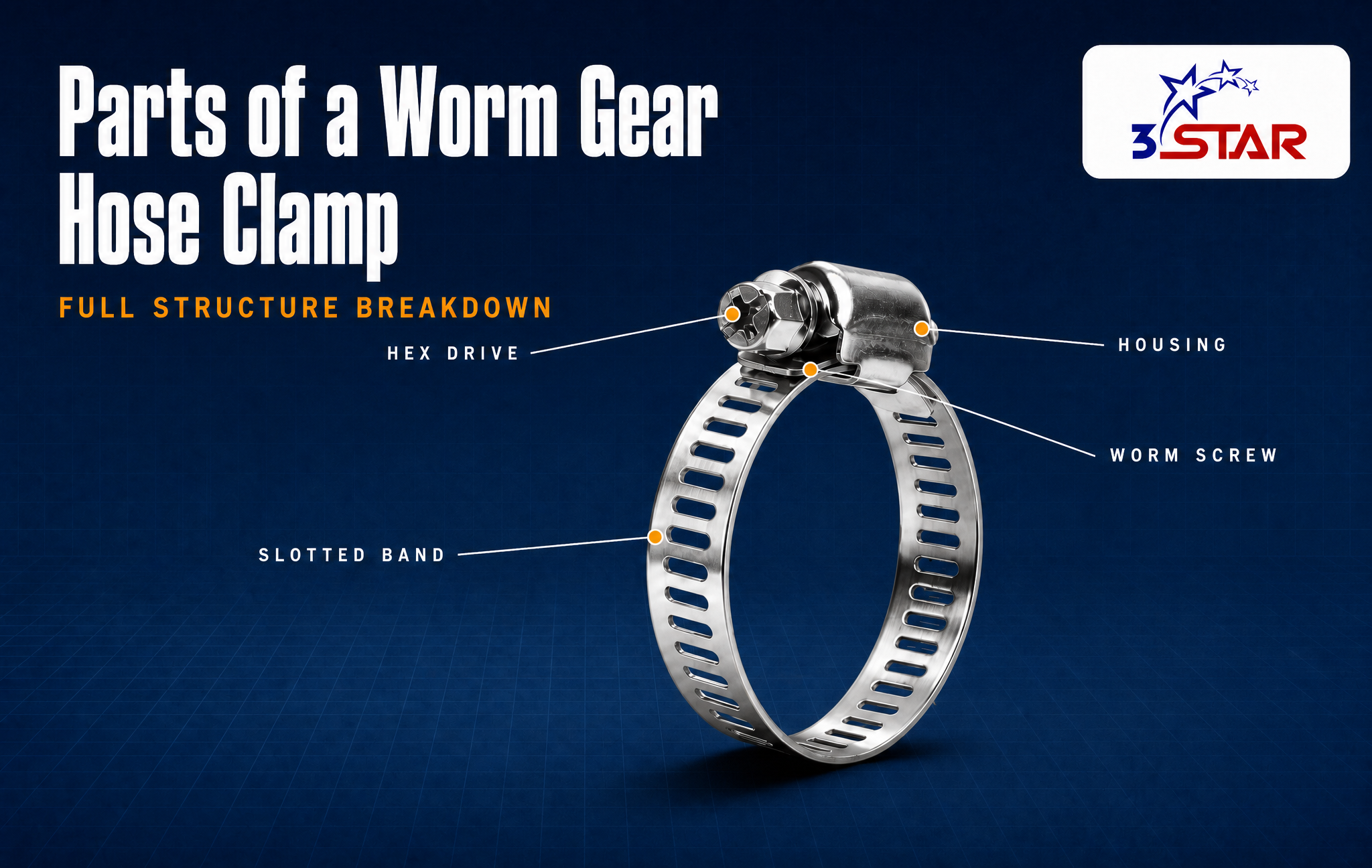
The band is the long, flexible metal strip that wraps around your hose to form the clamping loop. It is the main load-bearing part of the clamp.
The worm screw is the heart of the adjustment mechanism. Its helical threads engage with the slots on the metal band.
The housing is a stamped metal shell, riveted or fixed firmly onto one end of the band. It holds the worm screw captive and guides the band during tightening.
Located at the top end of the worm screw, this is the part you contact with tools.
When you turn the screw head with a screwdriver or wrench:
表格
| Component | Common Materials | Suitable Application |
|---|---|---|
| Band & Housing | Zinc-plated carbon steel | Indoor, dry, low-corrosion environment |
| Band & Housing | 201 Stainless Steel | General automotive & water pipeline |
| Band & Housing | 304 Stainless Steel | Outdoor, humid, mild corrosive conditions |
| Band & Housing | 316 Stainless Steel | Marine, saltwater, chemical exposure |
| Worm Screw | Zinc-plated carbon steel / 410 stainless steel / 304 stainless steel | Match corrosion requirement of working site |
Quick buying tip: If your project works in coastal, salt spray or chemical environments, choose all-stainless steel worm gear clamps to prevent rust and early failure.
A worm gear hose clamp looks simple, but weak components will lead to expensive downtime:
For industrial, marine and automotive applications, always inspect the band thickness, housing stamping quality and thread finish before bulk purchase.
If you need custom sizes, different material grades, bulk quotations for worm gear hose clamps, feel free to contact us.
Phone: +86-19331726596 Tel: +86-19331726596 E-mail: [email protected]
 Hot News
2026-03-25
2026-03-19
2026-03-11
2026-03-04
2026-02-27
2026-02-07
 EN
EN